Layout of
Hydroelectric Power Plants
Hydroelectric power plants convert the hydraulic potential
energy from
water into electrical energy. Such plants are suitable
were water
with suitable head are available. The layout covered in
this
article is just a simple one and only cover the important parts
of hydroelectric plant.The different parts of a
hydroelectric power plant are
(1) Dam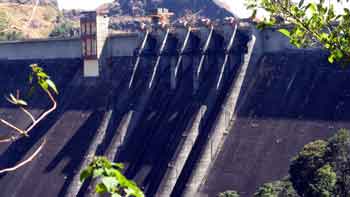
Dams are structures built over rivers to stop the water
flow and form a reservoir.The reservoir stores the water flowing
down
the river. This water is diverted to turbines in power stations.
The
dams collect water during the rainy season and stores it, thus
allowing for a steady flow through the turbines
throughout the year. Dams are also
used for controlling floods and irrigation. The dams should be
water-tight and should be
able to withstand the pressure exerted by the water on it. There
are
different types of dams such
as arch dams, gravity dams and buttress dams. The height of
water in the dam is called
head race.
(2) Spillway
A spillway as the name suggests could be called as a
way for spilling of water from dams. It is used
to provide for the release of flood water from a dam. It is used
to
prevent over toping of the dams which could result in damage or
failure of
dams.
Spillways could be controlled type
or uncontrolled type. The uncontrolled types start releasing
water upon
water rising above a particular level. But in case of the
controlled
type,
regulation of flow is possible.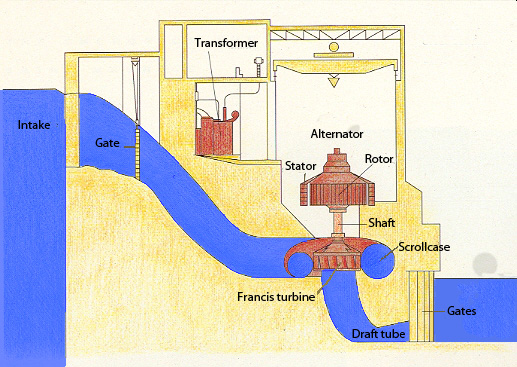
(3) Penstock and Tunnel
Penstocks are pipes which carry water from the
reservoir to
the turbines inside power station. They are usually made
of steel and
are equipped with gate systems.Water under high pressure flows
through
the penstock. A tunnel serves the same purpose as a penstock. It
is
used when an obstruction is present between the dam and power
station
such as a mountain.
(4) Surge Tank
Surge tanks are tanks connected to the water conductor
system. It serves the purpose of reducing water hammering in
pipes which can cause damage to pipes. The
sudden surges of water in penstock is taken by the surge tank,
and when
the water requirements increase, it supplies the collected water
thereby
regulating water flow and pressure inside the penstock.
(5) Power Station
Power station contains a turbine coupled to a generator
(see the cross section of a power house on the left). The water
brought to the power station rotates the vanes of the turbine
producing torque and rotation of turbine shaft. This
rotational
torque is transferred to the generator and is converted into
electricity. The used water is released through the tail race.
The
difference between head race and tail race is called gross head
and by
subtracting the frictional losses we get the net head available
to the
turbine for generation of electricity.